Never Mix Up Connecting Rod Caps! (A17030B)
Reference number: A17030B
NEVER MIX UP CONNECTING ROD CAPS!
TECHNICAL SERVICE BULLETIN
| HONDA: | All Models |
AFFECTED VEHICLES
General Information
EDITOR'S NOTE: This article revises the one posted earlier in March 2017.
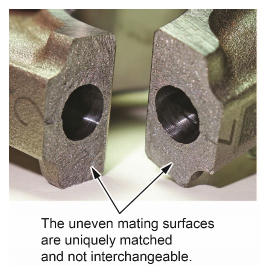
For over 10 years, we've been using fracture-split connecting rods in our engines. Unlike a machined connecting rod, this rod is forged as a single piece of metal. Then, using special equipment, the large end of the rod is precisely scored, and the rod cap is literally snapped from the rod.
This process results in an uneven fracture surface on the connecting rod and rod cap, which gives a more precise, durable cap-to-rod fit. Fracture-split connecting rods offer greater strength and longer service life.
Because that fit is so precise, you must be careful not to mix up the rod caps when removing/replacing pistons. If you install the wrong rod cap on a connecting rod, or install it backwards, you'll damage the mating surfaces when you torque the cap bolts.
If nothing is done about it, over time, that connecting rod and its bearings will need replacement. In severe cases, it could lead to major crankshaft journal damage, requiring possible short block replacement.
So, to help ensure a trouble-free repair, here are a few tips to remember:
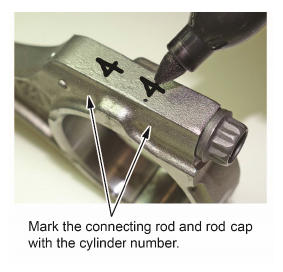
- Before removing the rod caps, use a grease pencil or suitable marking pen to mark each cap and its corresponding connecting rod with the cylinder number it came from. This ensures you're putting the same rod and cap back together with the right orientation.
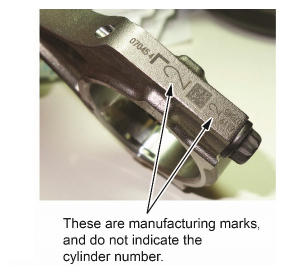
- Don't confuse the existing markings on the side of the connecting rod and rod cap with a cylinder number. They're just manufacturing marks referring to the size of the big end of the rod.
- When torqueing the rod cap bolts, refer to the service information for details.
If you would like to see a video on this subject, we've added one to Tech2Tech®. Look for "Tips When Working With Fracture Rods."