Description And Operation
The power lock requests can be sent to the Body Control Module (BCM) using external or internal controls switches.
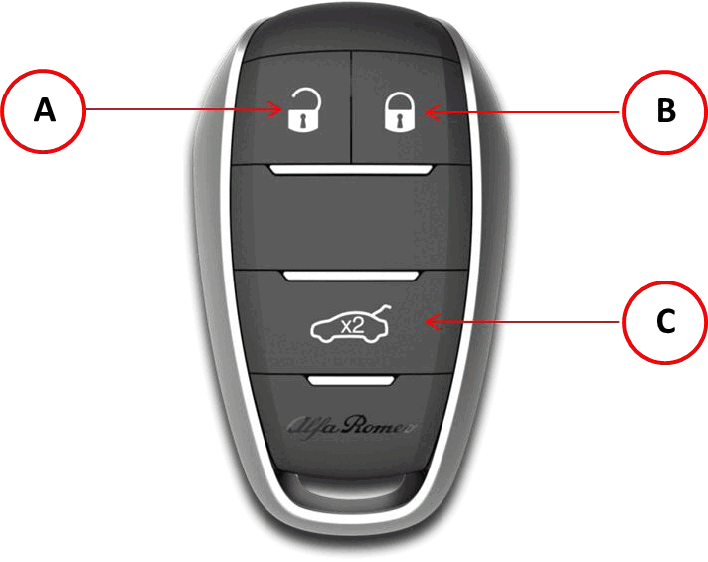
Whenever the user presses button A, button B, or button C twice, the lock/unlock signals are detected by the Radio Frequency Hub Module (RFHM). Once the signal is detected, the RFHM sends the request via Controller Area Network (CAN) data bus to the BCM, which will send current to the concerned power lock component to change their status.
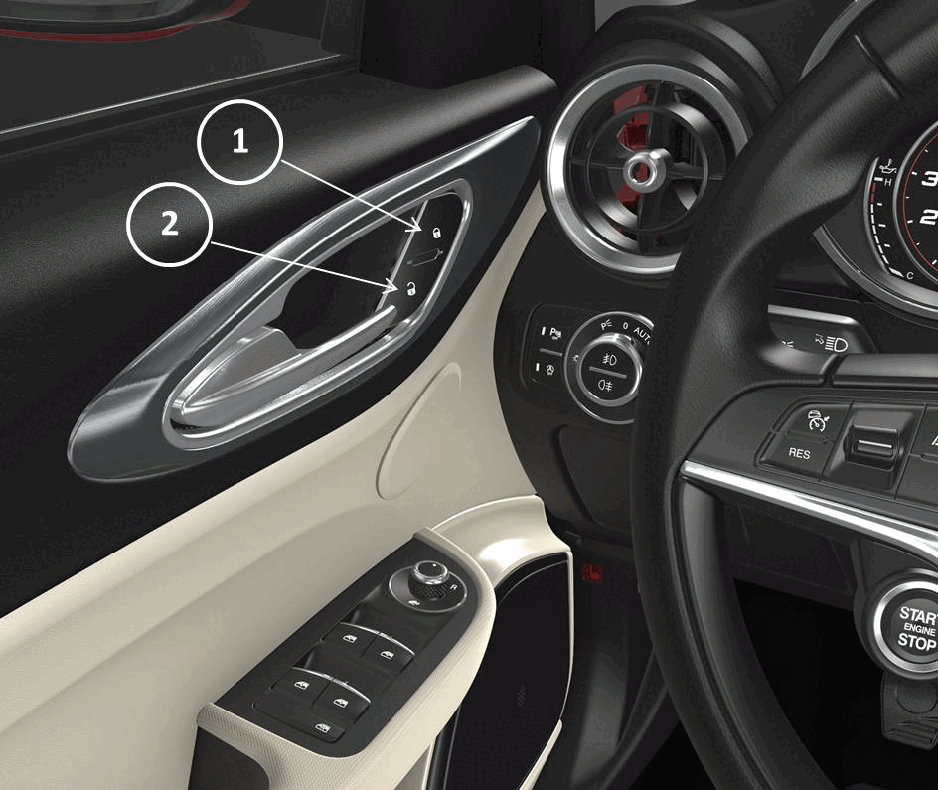
The user can lock and unlock the doors by using the front power lock switch buttons (left side and right side).
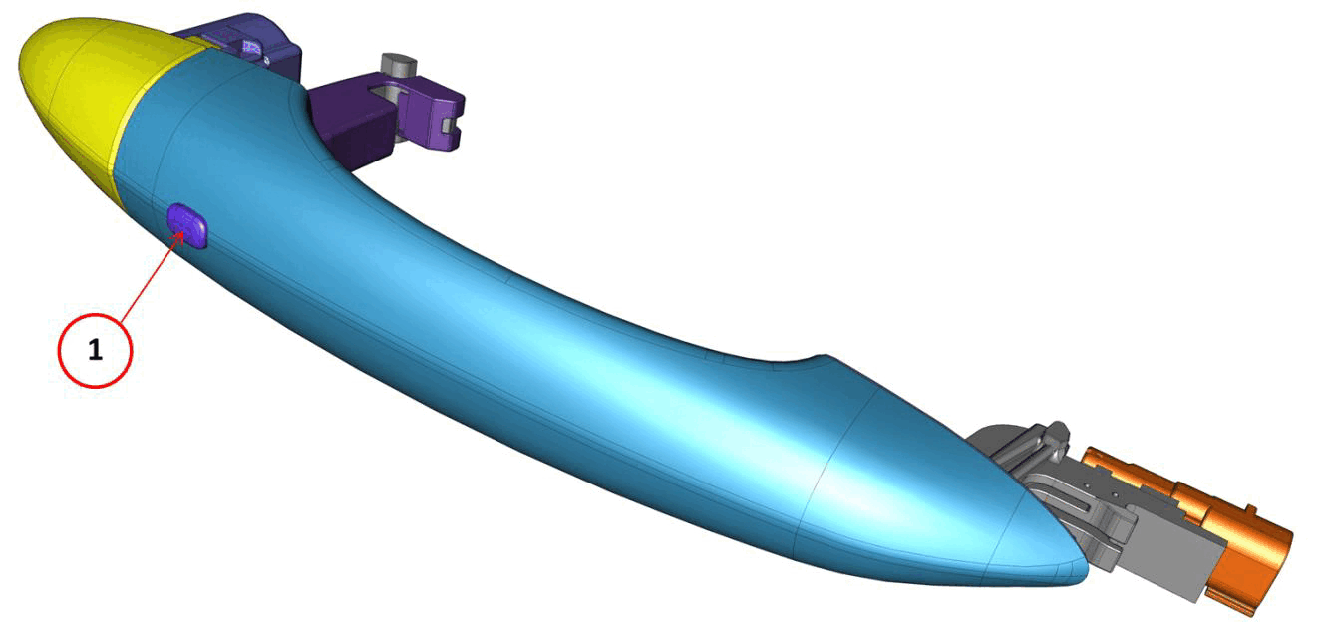
FRONT DOOR HANDLE SWITCH (PASSIVE ENTRY)
If the vehicle is equipped with Passive Entry (PE) system, the front door handles are equipped with a tactile door unlocking request button (electrically connected to the RFHM) and a proximity sensor arranged inside the handle (also electrically connected to the RFHM), This feature allows the customer to passively unlock the doors.
AUTOMATIC DOOR LOCKING/UNLOCKING
- The power locks will auto lock:
- When the vehicle speed is greater then 20 km/h (13 mph), the BCM locks all of the doors. (Vehicle speed data is received by the BCM via the CAN - this function may be deactivated using the customer programmable features menu).
- When drivers door lock/unlock cylinder switch recognizes the movement of a key within the door cylinder itself. The switch is hard-wired to the BCM.
The front and rear door power locks are provided with switches which allow the BCM to control the door statuses:
- The ajar switches indicate the "door open" or "door closed" statuses
- The latch switches indicate the "door locked" or "door unlocked" statuses
For each "key status" (OFF, RUN, START), the BCM checks the status of the doors (open or closed) through the switches in the locks before sending the door locking/unlocking command. According to the door status (open or closed), the BCM manages the door lock request if one or more doors are open.
DOOR AJAR SWITCH
Door switch on driver's door: if the door is closed the switch is open; if the door is open the switch is closed.
Door switch on passenger's door: if the door is closed the switch is open; if the door is open the switch is closed.
Rear door switch: if the doors are closed the switches (left and right) are open; if the doors are open, the switches are closed.
Trunk switch: if the trunk is closed, the switch is closed; if the trunk is open, the switch is open.
Hood switch: if the hood is open the switch is open; if the hood is closed the switch is closed. (There is only a hood switch if there is an alarm.)
Where there is the passive entry system, the doors can be centrally locked even if one or more doors are open. In this condition (one or more doors open), the control will be run if the power locks are centrally unlocked. When the last door is closed, the RFHM will determine the position of the keys: if the key or keys are outside the vehicle, the doors will stay locked. If they are inside the vehicle, the BCM will centrally unlock the doors as indicated by the RFHM.
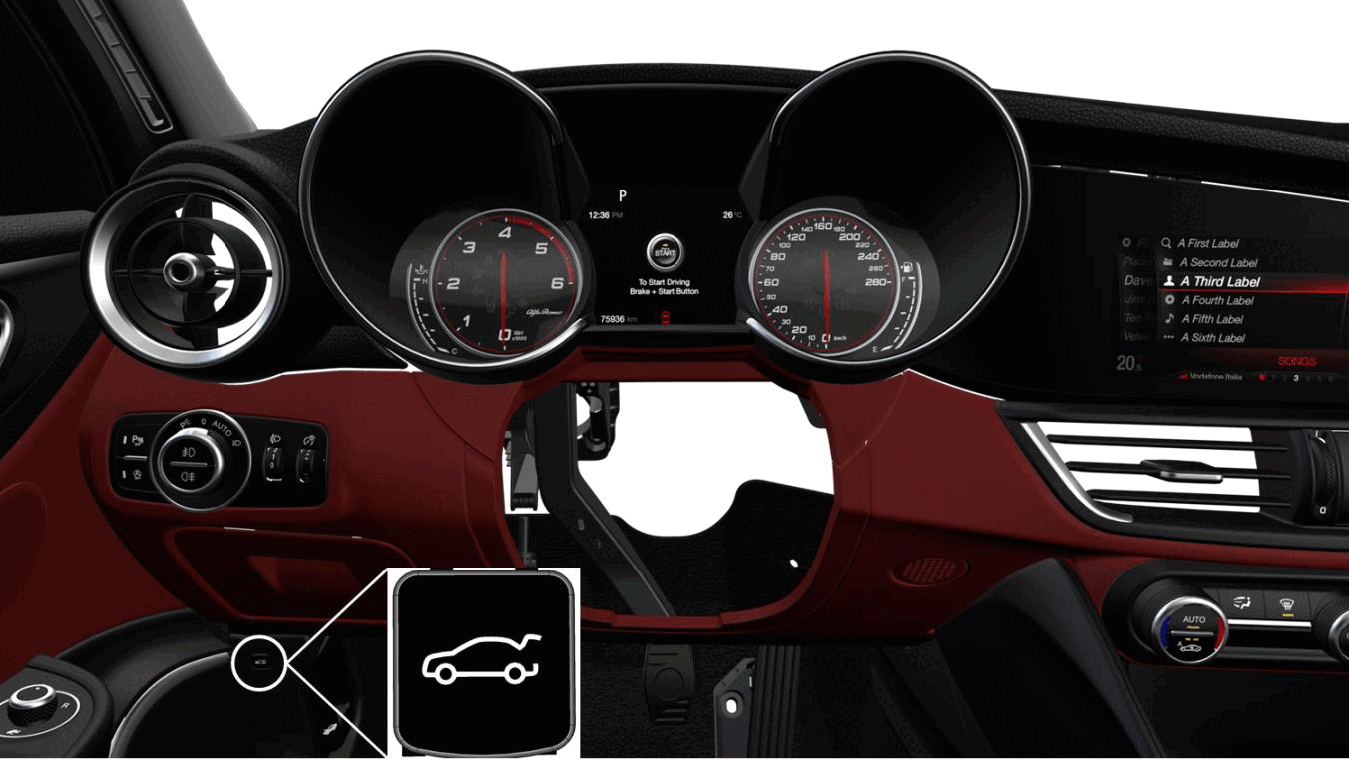
Decklid Release Switch - Interior
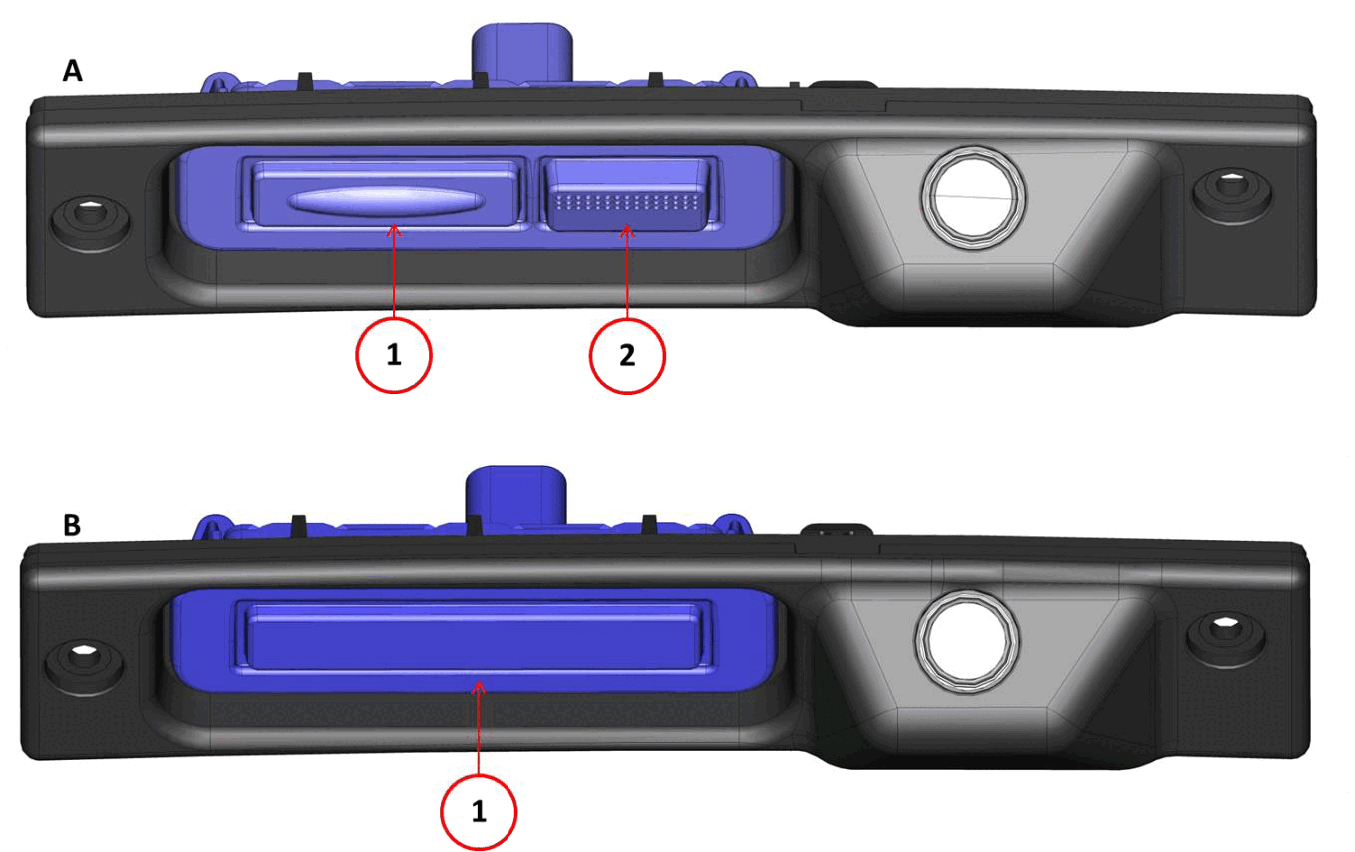
Exterior Decklid Release Tactile Switch
- A - With passive entry (1 - decklid release switch; 2 - door locking switch)
- B - Without passive entry (1 - decklid release switch)
The trunk release switch is electrically connected to the BCM. If the vehicle is equipped with PE system, this is integrated in a single module jointly with the PE door unlocking switch.
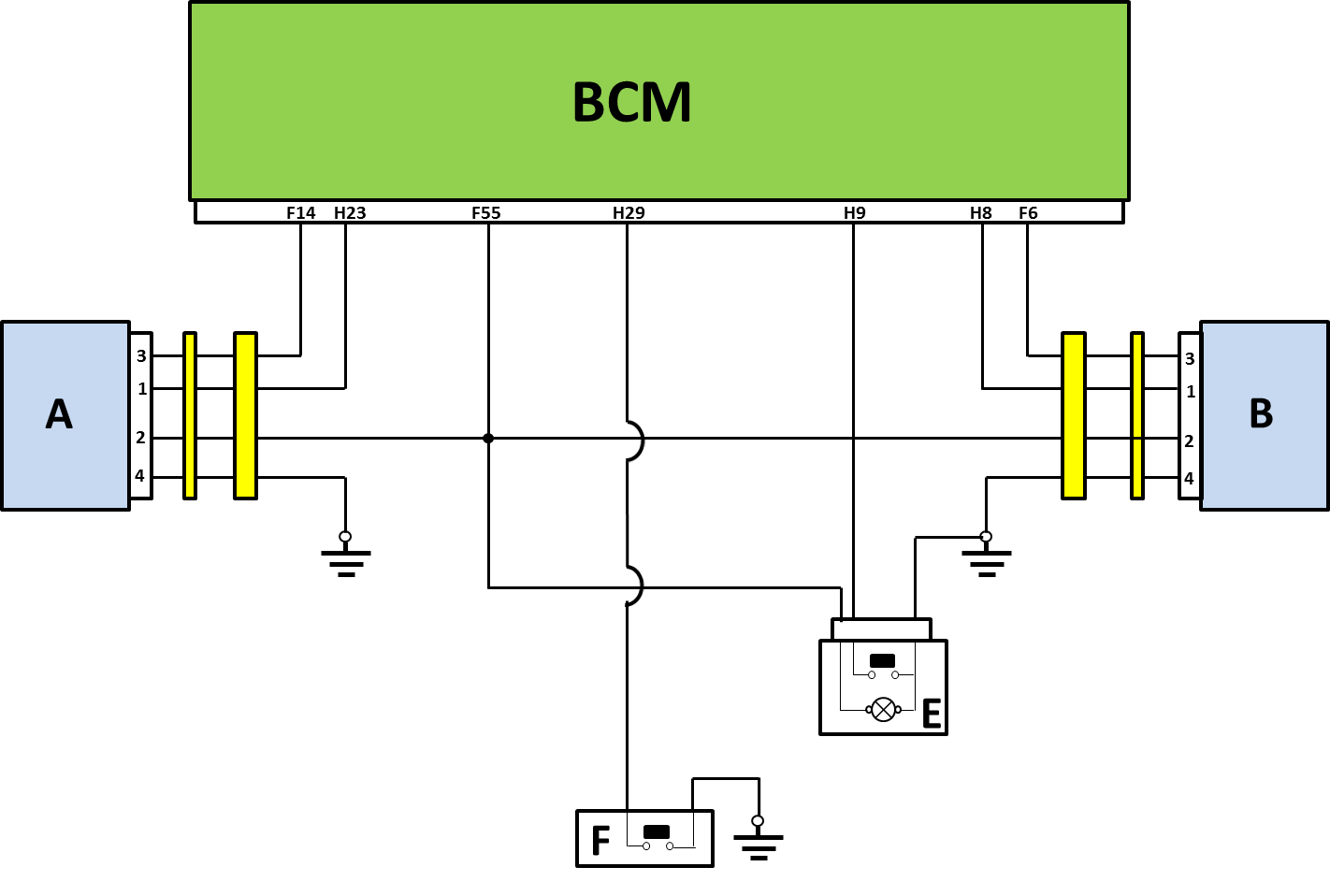
| A | Left Door Switch |
| B | Right Door Switch |
| E | Interior Decklid Release Switch |
| F | Exterior Tactile Decklid Release Switch |
The BCM directly manages the power lock system. When the BCM receives the door lock or unlock request input it sends current to the power locks to actuate the lock motor.
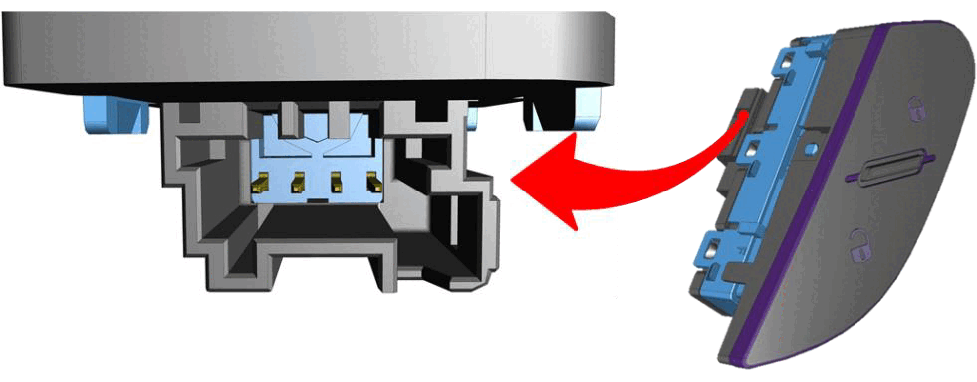
| PIN | DESCRIPTION |
|---|---|
| 1 | LED |
| 2 | Backlight |
| 3 | Door Lock/Unlock signal (output) |
| 4 | Ground |
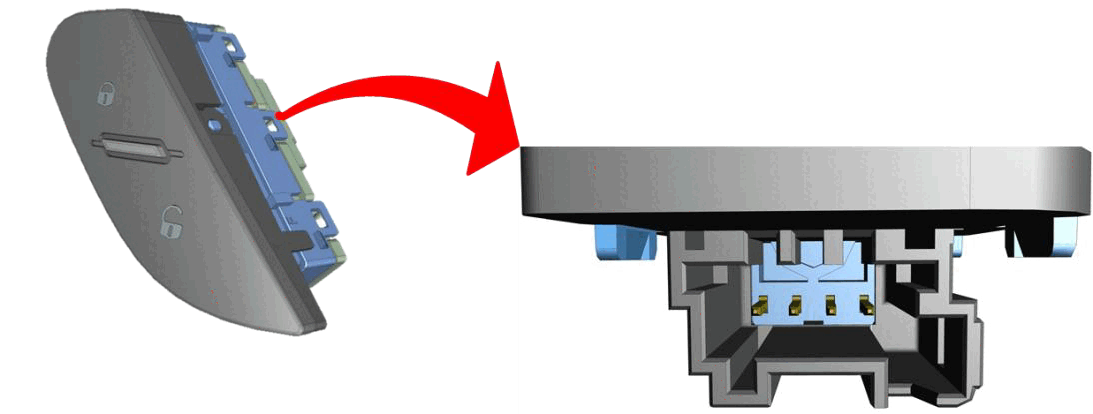
| PIN | DESCRIPTION |
|---|---|
| 1 | LED |
| 2 | Backlight |
| 3 | Door Lock/Unlock signal (output) |
| 4 | Ground |