Description And Operation
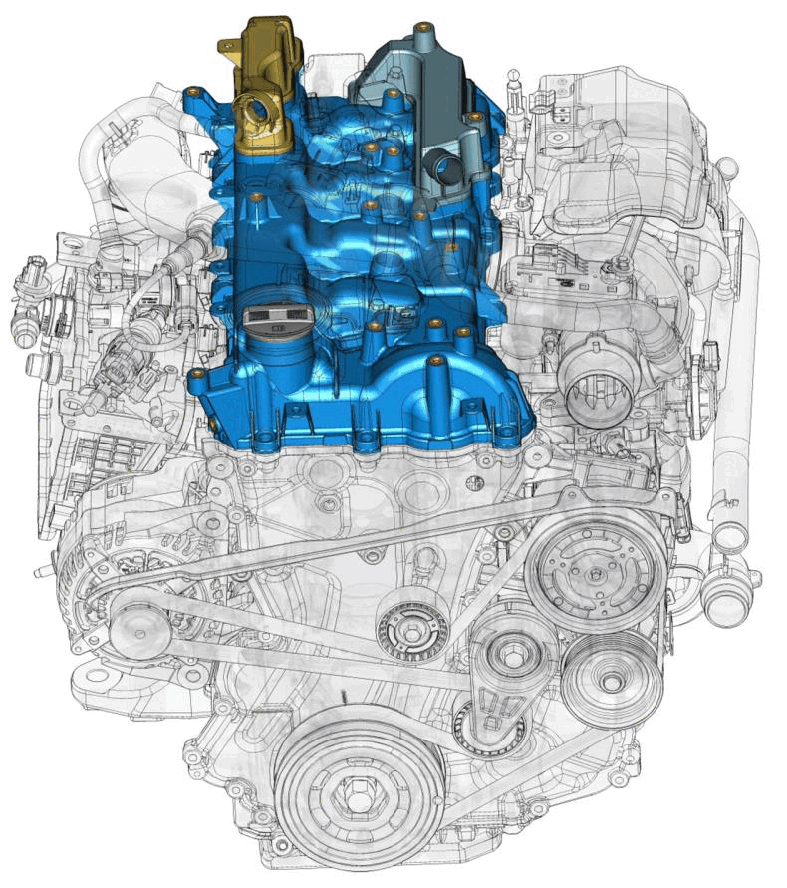
The cylinder head cover is made of plastic and includes the blow-by oil vapor separators.
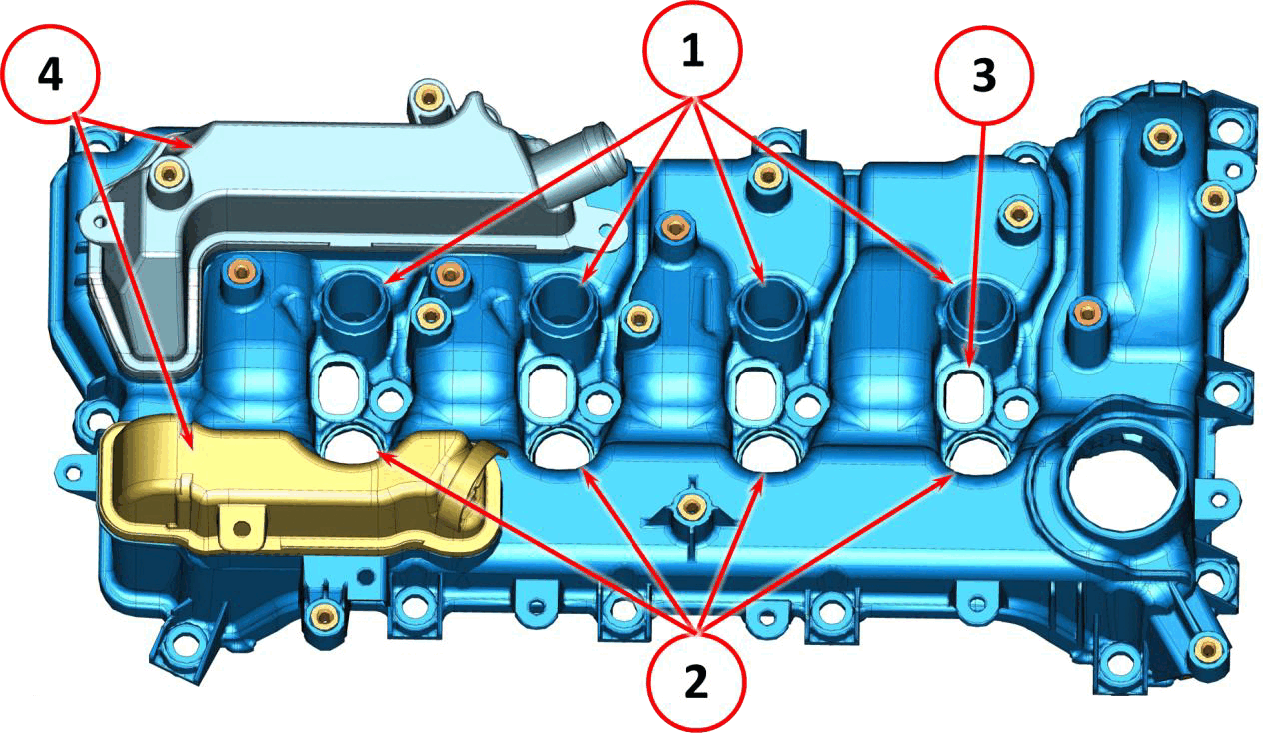
On the top of the cylinder head cover there are mounting surfaces and related cavities for the following components:
- Ignition coils
- Fuel injectors
- Access for the fuel rail mounting brackets
- Blow-by oil vapor recirculation separators
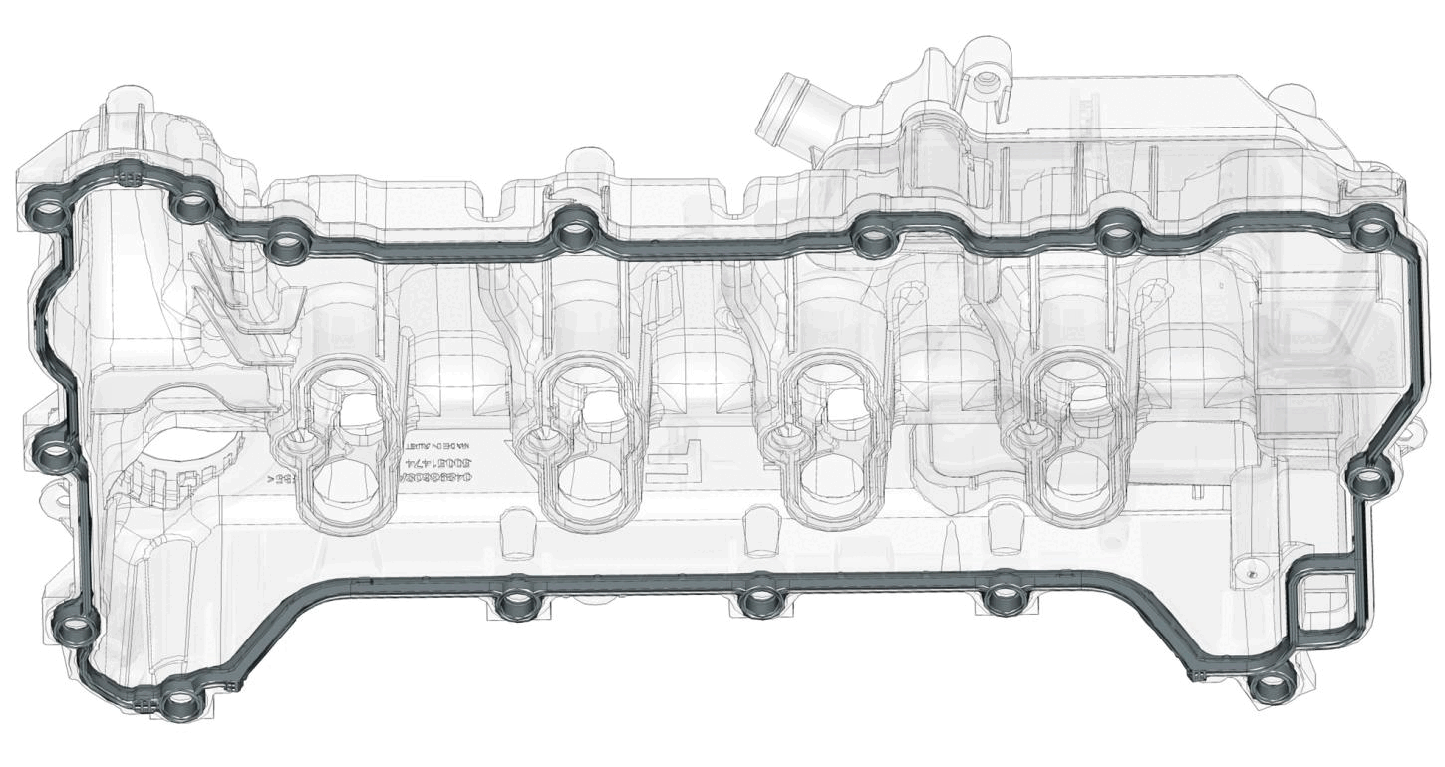
The cylinder head cover has a rubber seal that covers the entire perimeter of the cylinder head interface.
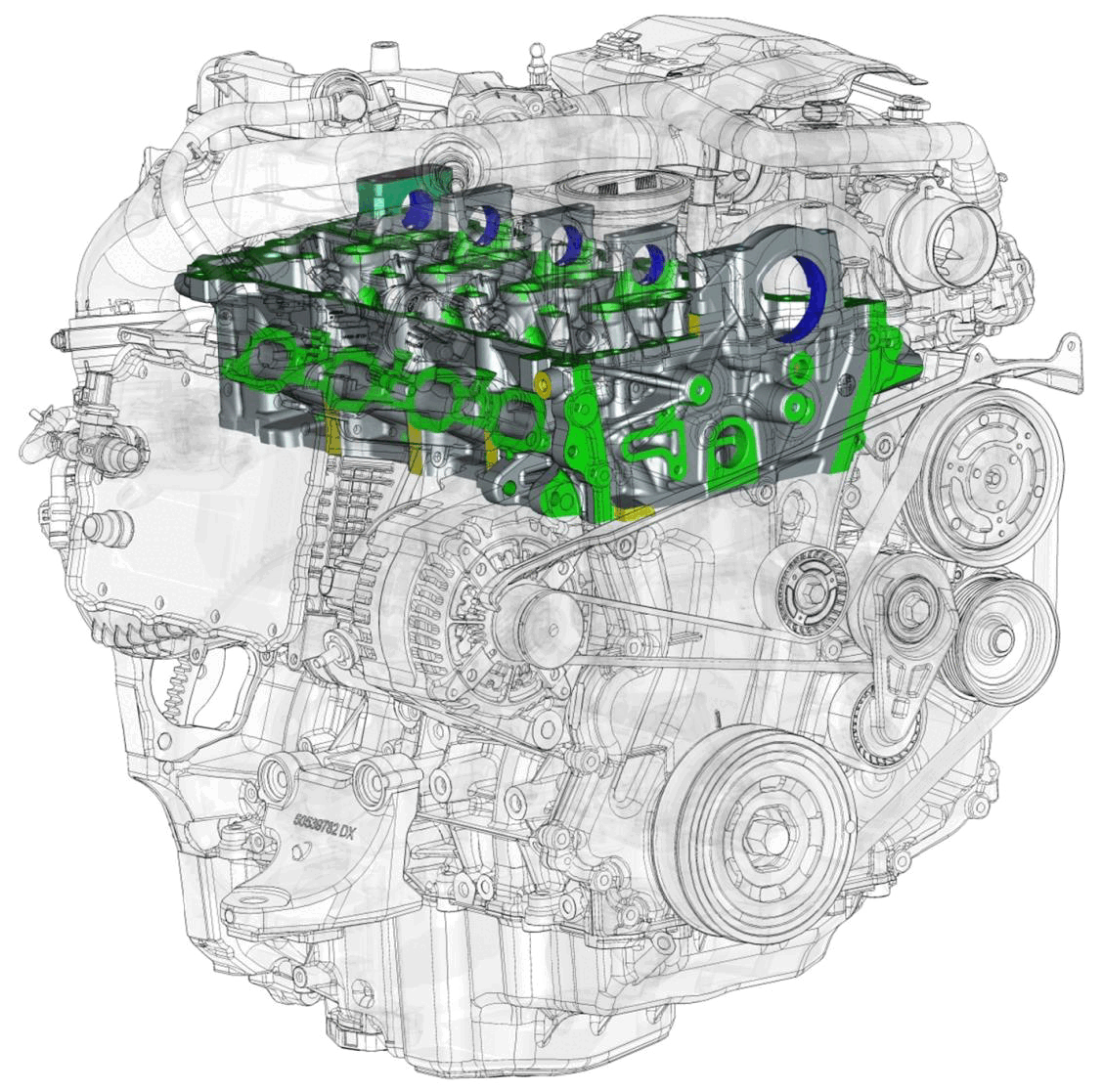
The cylinder head is a one-piece aluminum alloy casting. It was designed to support a single camshaft and the MultiAir module. The cylinder head has the following features:
- Four valves per cylinder.
- The valve guides are press-fit in the cylinder head. A special reamer is used to produce the correct bore size and alignment after installation. The valve guides are not serviceable.
- The exhaust valves are driven directly by the camshaft through hydraulic lifters and rocker arms.
- The intake valves are driven by the MultiAir module.
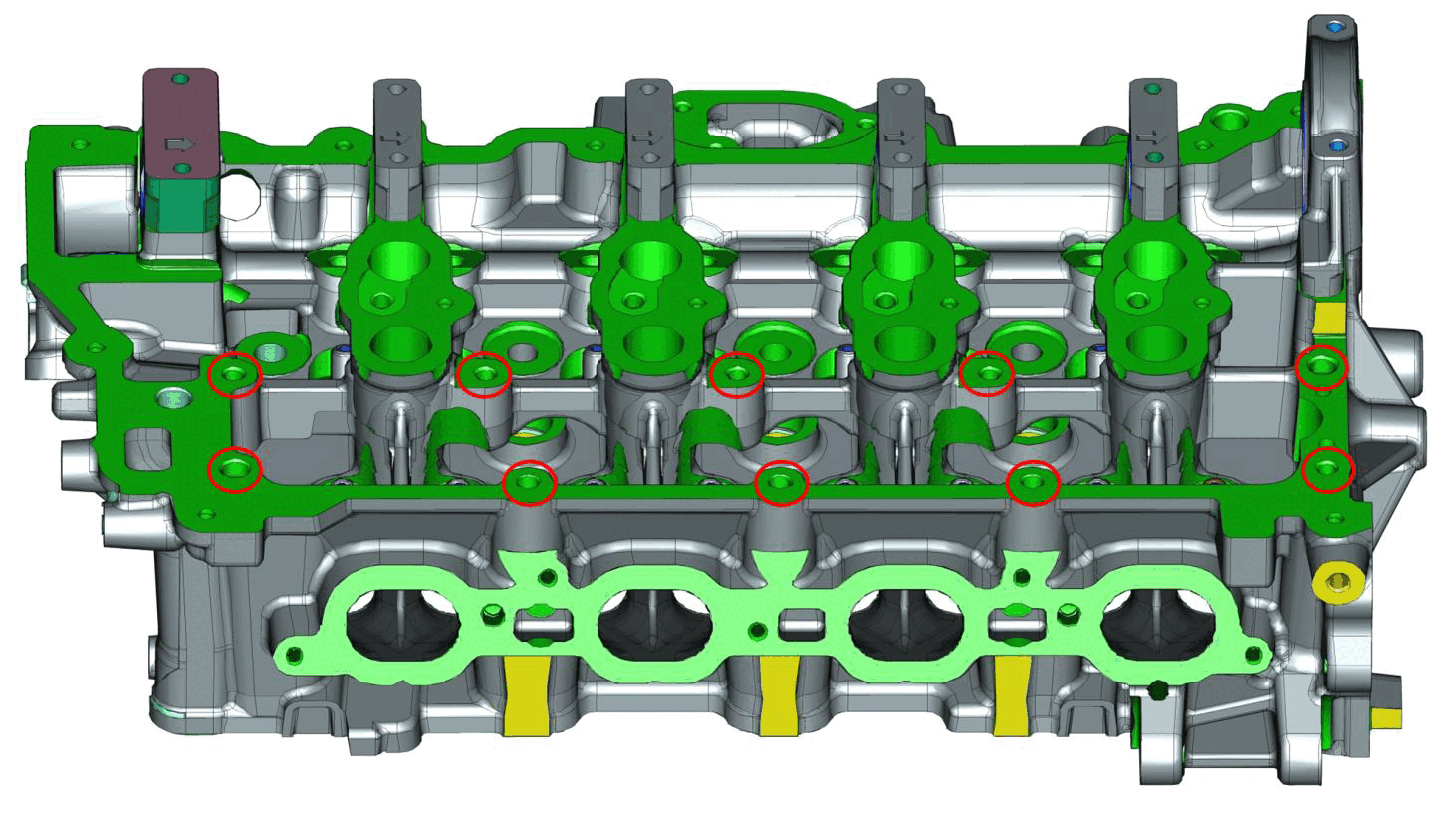
The MultiAir module is fastened to the intake side of the cylinder head at ten locations.
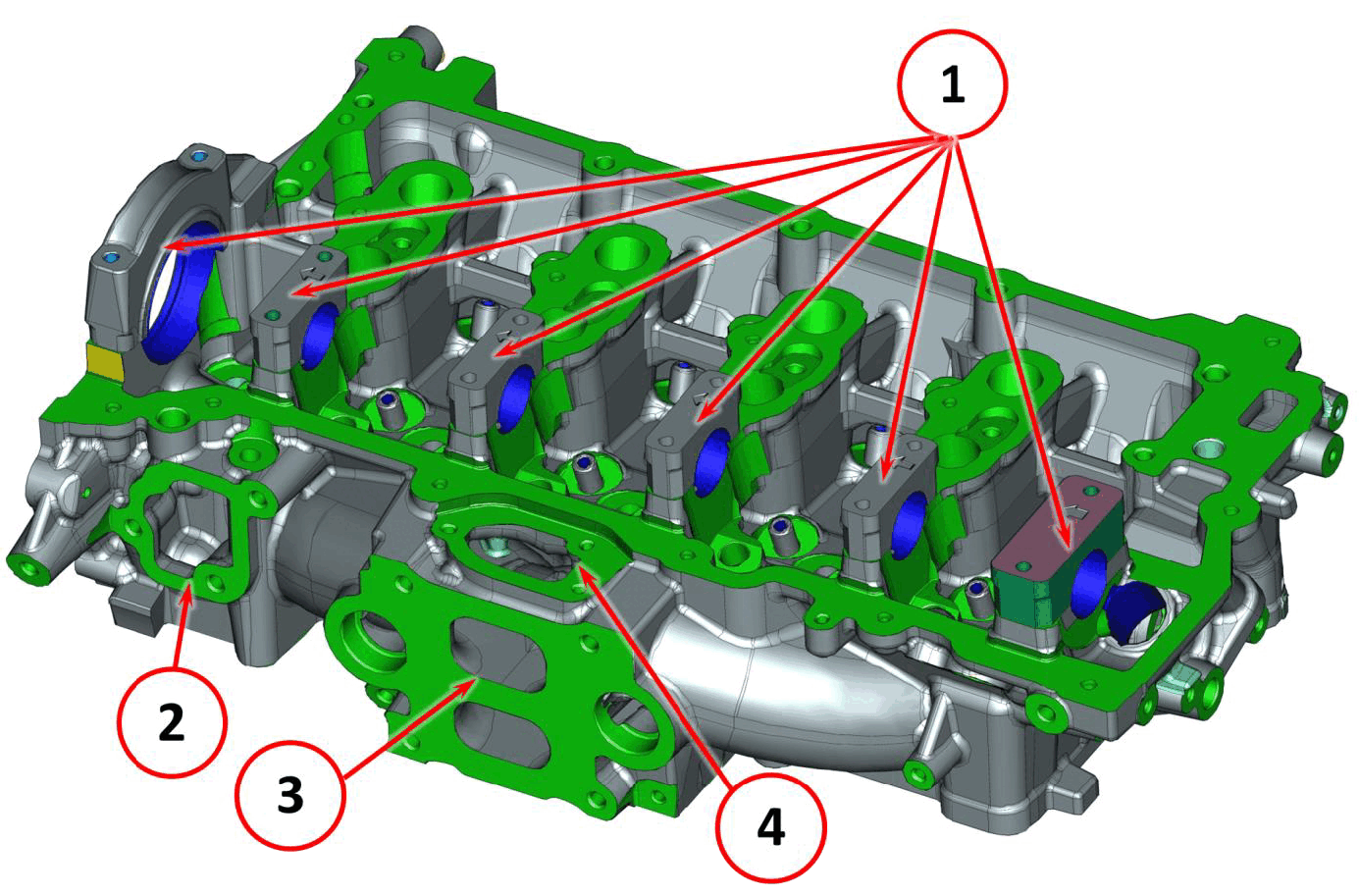
On the exhaust side of the cylinder head there are mounting surfaces and related cavities for the following components:
- Camshaft bearing caps
- Exhaust gas passage for the low pressure Exhaust Gas Recirculation (EGR)
- Cavity to allow the exhaust gas to exit from the combustion chamber (turbocharger mounting location)
- Cavity to allow the engine coolant to pass to the coolant temperature control valve
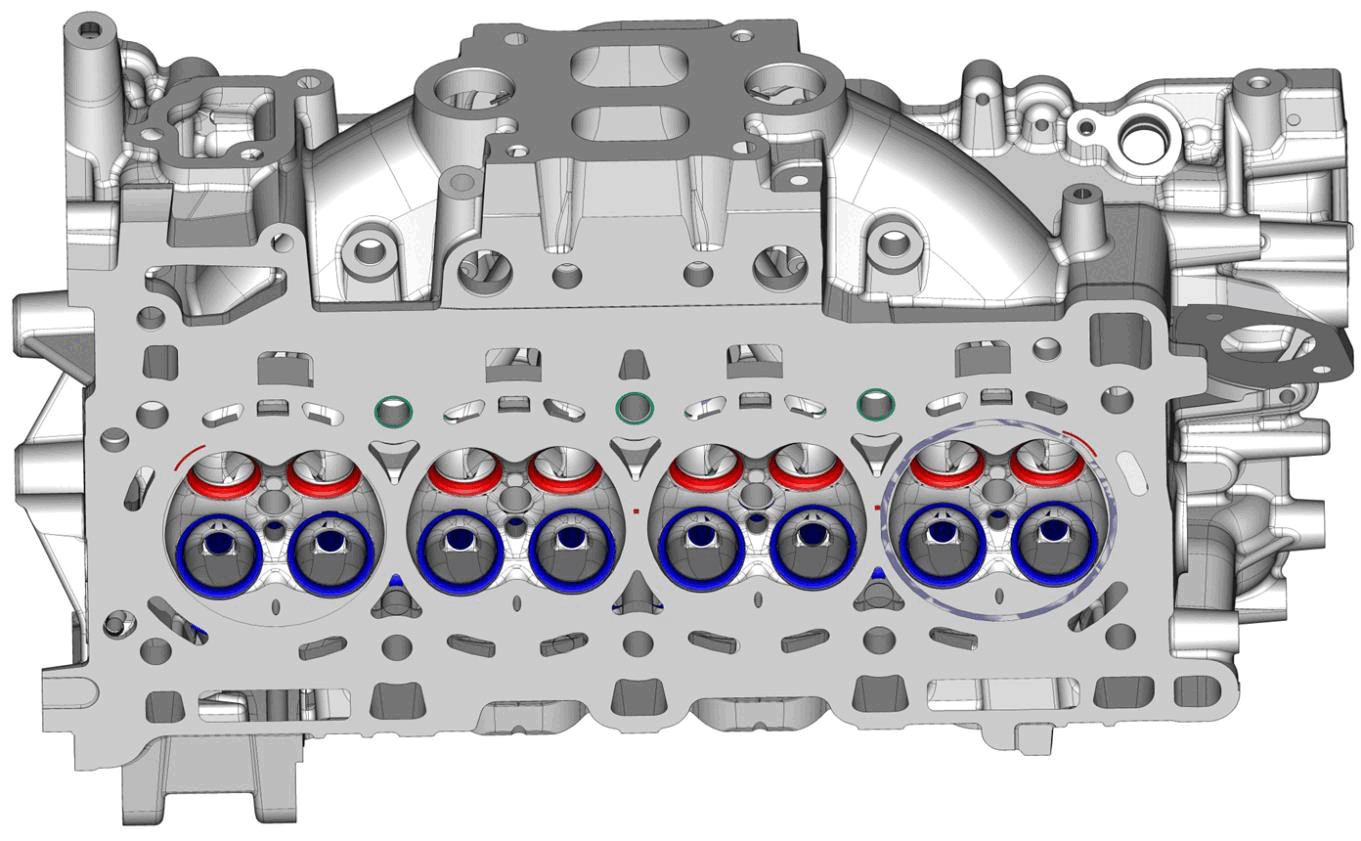
The combustion chambers feature steel inlet and exhaust valve seats.
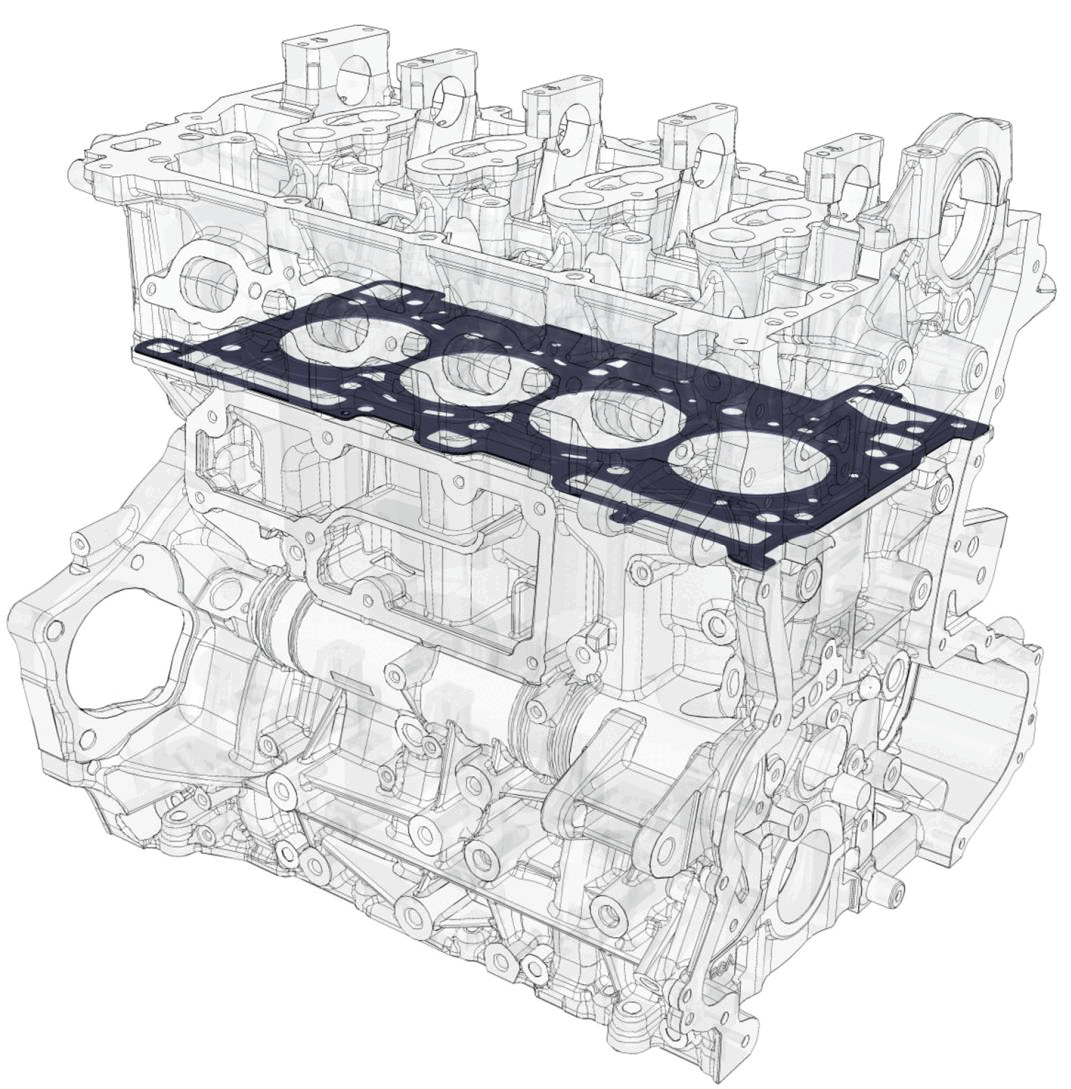
The cylinder head gasket is a multi-layer steel (MLS) type. It is available in one thickness only. Its thickness (when compressed) is 0.78 mm ± 0.055 mm (0.031 in. ± 0.002 in.).
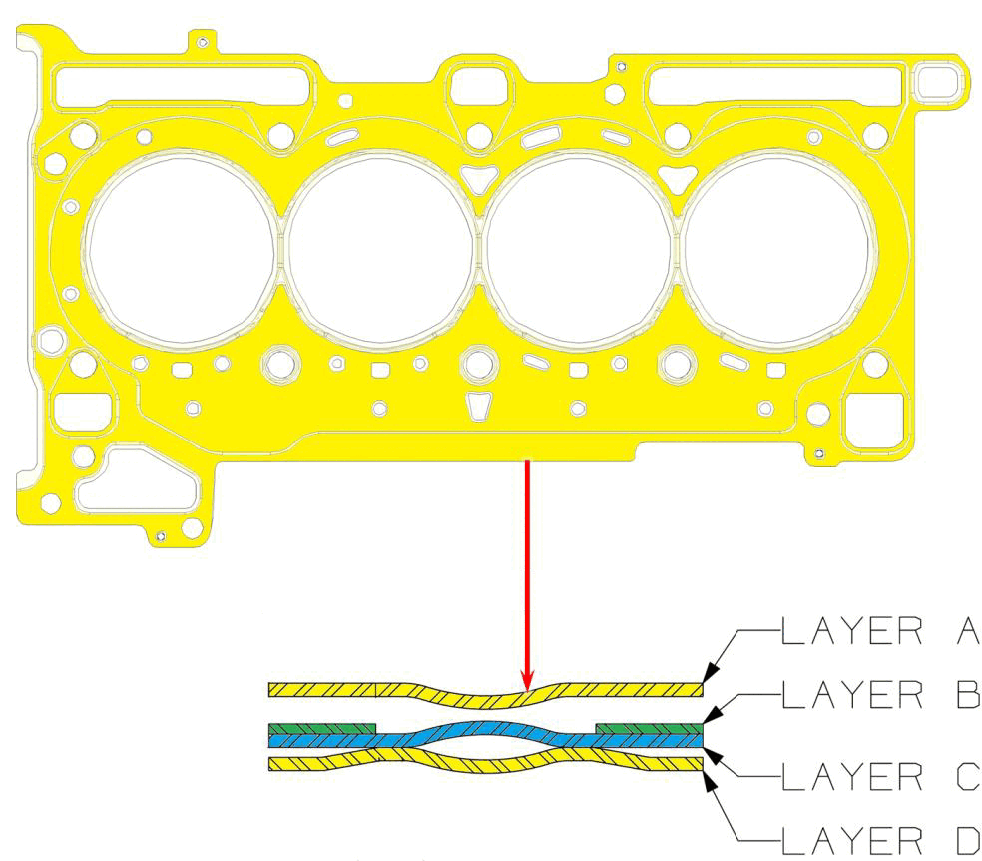
Multi layer steel or MLS construction consists of two or more embossed stainless sheets riveted to a flat metal core. They require no additional sealant. Due to the hardness of stainless steel, MLS gaskets require a very smooth finish surface or leaks may result.